 With more and more consumers spending time on the web looking for online bargains (let’s be honest, if I see a game for £27.99 online but £34.99 in shops then I wouldn’t be thinking twice either) instead of shops, companies must ask themselves if their website is not only showing the right prices, but is also usable enough to order items from.
In 2005 there was a huge wave of online shops reworking their ordering processes to make them more usable and accessible to people, which was a sounding success for many companies. These days however more offline stores are trying to expand to the web and are asking for advice. Here are ten ways to improve the usability of your e-commerce site to maximise your conversion rate and help convert ‘browsing your wares’ into ‘placing an order’:
 Usability is a serious concern for many websites – what does the customer want when he arrives on your website? Does the user know where to go, what to do and how to ask questions or enquire / purchase?
 I bumped into a former student of mine this evening – pleasant surprise. We had a quick chat about work and life, and he asked me if there was a quick way to explain the Usability Heuristics to someone in his company that would not involve a lot of reference material.
 I was just talking to an acquaintance of mine (a php developer) about website design when we started discussing accessibility and usability. His response was:
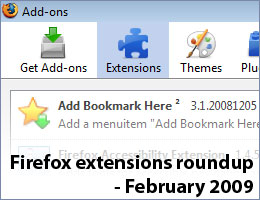 Those of you following me on twitter know I tend to spend a bit of time every couple of days in finding new extensions for FireFox (and sometimes Thunderbird) which are making my life as an Information Architect, Web Designer or Project Development Manager easier. These extensions may be some all of us have been using for ages but never really realised we had them installed, or some we really wanted to see or use for some time, but never really spent the time researching whether these extensions are actually available. This is the list of February…
 The new website of Rising Star Games, the Japanese publisher with European roots, has just been put live.
 Working in a busy office is one of the best parts of being a designer or information architect – you can bounce off ideas, discuss projects with others and get their input, and you can generally have a good laugh.
 Google Earth’s latest update – Google Ocean – adds a plethora of underwater maps for users to take a dive beneath the water surface and explore the 3D terrain (no more 2D relief maps!) of the world’s sea floors, completely with underwater elevations. Users will be able to explore underwater volcanoes and shipwrecks, and even video footage from the most famous diving spots across the world.